Documentation Best Practices for People and AI Agents
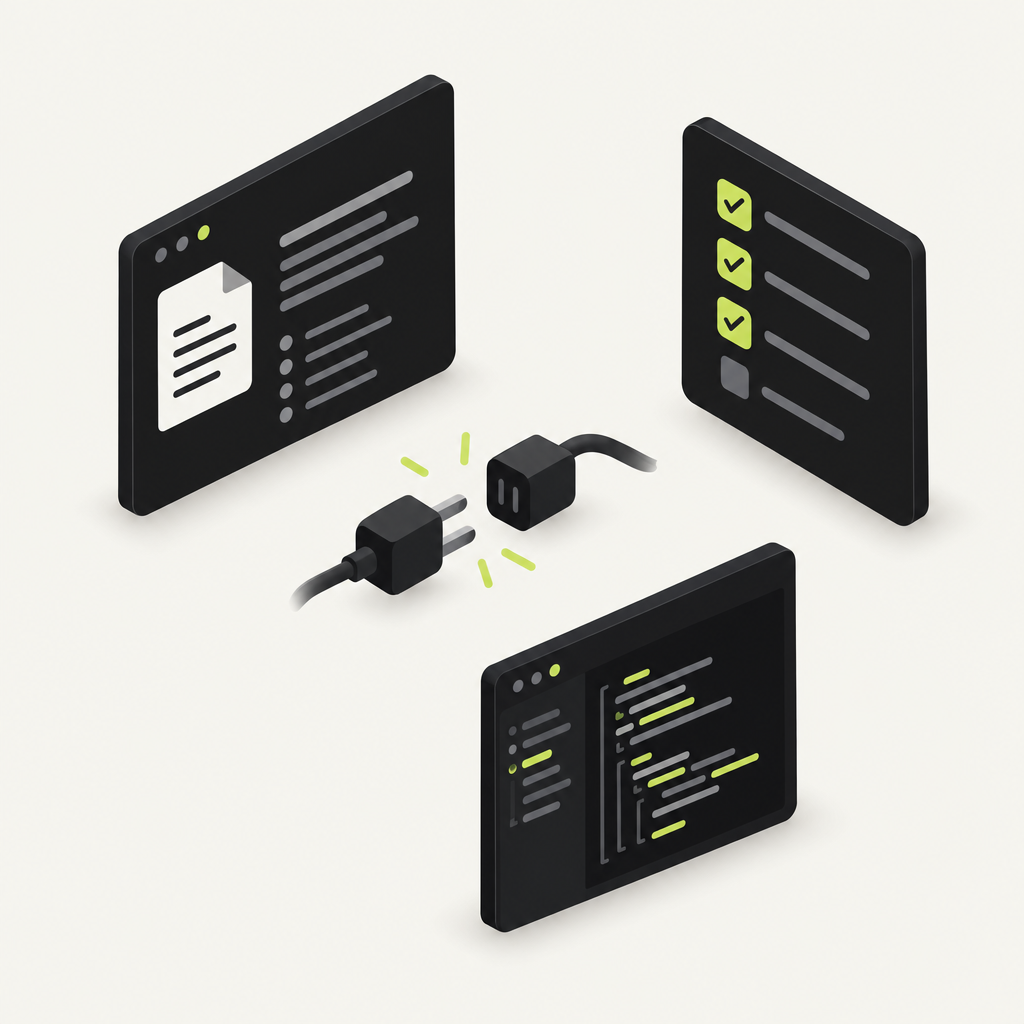
With DocStar, documentation best practices come down to one idea: write each page once, clearly enough that a person can skim it and an AI agent can act on it, then let DocStar serve that same page as a docs site, an llms.txt entry, a Markdown copy, an MCP server and (for API docs) a CLI. In 2026 your readers include coding agents and AI assistants, so "good docs" now means docs both can use. Below are the practices we follow ourselves, and how your AI agent can apply them to your docs in one prompt.
Documentation best practices at a glance
| Practice | Why people need it | Why AI agents need it | What DocStar does for you |
|---|---|---|---|
| One topic per page | Easy to find and skim | Clean, focused chunks to retrieve | Every page gets its own URL and .md copy |
| Answer first | Readers stop scanning sooner | The first lines are what gets quoted | AI SEO metadata and AI SEO Score |
| Numbered steps with a check at the end | Fewer "did it work?" questions | Agents follow steps literally | Agent drafts steps from your code |
| Full request and response examples | Copy, paste, done | Agents build calls from examples | Endpoint docs become MCP tools and CLI commands |
| Stable, readable URLs | Bookmarks keep working | Links in llms.txt stay valid |
Automatic 301 redirects on rename or move |
| Machine-readable copies | Not visible, not in the way | Plain text beats HTML noise | llms.txt, sitemap and .md for every page |
| Update docs with the code | Docs match the product | Agents never call an outdated contract | GitHub Sync and docstar.md |
| Measure and fix | Fix what confuses readers | Fix what makes tool calls fail | Analytics, reader feedback and MCP Logs |
Structure: make every page easy to find
Organise by what readers want to do, not by your org chart. Group pages into a few clear sections (Getting started, Guides, API reference, FAQs, Changelog). In DocStar these all live in one workspace, so a reader moves from a guide to the endpoint it mentions without switching sites.
Keep one topic per page. A page called "Webhooks" that also explains billing and SSO is hard to skim and hard for an AI to quote correctly. Short, focused pages give search engines and AI assistants clean answers to lift.
Use short, descriptive slugs. reset-password beats how-to-reset-your-password-in-the-app. When you do need to rename or move a page, DocStar adds a permanent (301) redirect from the old URL automatically, including for subpages, so shared links and search rankings survive.
Writing: answer first, then show the steps
Lead with the answer. The first two sentences of a page should say what it is for and what the reader will have at the end. That is also the part search snippets and AI answers tend to use.
Write steps as numbered actions with one action each, and end with a check ("You should now see..."). People skim steps; agents follow them literally, so an ambiguous step becomes a failed task.
Show complete examples. For API docs, every endpoint needs a clear description, every parameter explained, a full JSON request body example and real success and error responses. In DocStar this is doubly important: the same endpoint docs become the tools on your collection's MCP server and the commands in the DocStar CLI, so a vague description means an AI agent picks the wrong tool or sends the wrong field. Our guide to keeping API docs in sync with your code explains why wrong docs now break agents, not just confuse people.
Use plain words and one name per thing. Agents don't guess that "workspace", "org" and "account" mean the same object.
Publishing: make docs readable by AI, not just by browsers
This is where most docs teams fall behind, and where DocStar does the work for you. When you publish a page, DocStar:
adds it to
sitemap.xml, which updates as you publish or unpublish;lists it in a generated
llms.txtfile, the plain-text index AI tools read to understand your docs;serves a raw Markdown version at the page URL plus
.md, which AI crawlers and assistants read more reliably than HTML;makes it searchable through your collection's MCP server. Drafts never reach the MCP server; only published content does.
Details are in SEO, Sitemap and llms.txt. Two more habits matter here:
Write a real meta title and description for your key pages. In DocStar, Generate with AI fills in the meta title, description and tags from the page content, and if you publish a page without them, DocStar generates them in the background. Published pages with at least 1,000 characters also get an AI SEO Score out of 100 with suggestions.
Serve docs from your own domain. Pages on the default DocStar link are marked
noindex. Connect a custom domain to get search traffic.
Not sure whether you need llms.txt, an MCP server or both? See llms.txt vs MCP Server: Which Do Your Docs Need?
Maintenance: treat docs as part of the product
Update docs in the same change as the code. The most common docs failure isn't bad writing; it's stale writing. With GitHub Sync, your OpenAPI files live in api-docs/ and Markdown pages in docs/, next to your code, so docs change in the same commit and pull request and spec changes show up in the PR diff.
Measure, then fix the pages that matter. DocStar's Analytics dashboard shows reads per page, page status, SEO score, UTM sources and Was this helpful? feedback with reader comments. Sort by reads, then look at negative feedback: a popular page with many "No" votes is your top priority.
Watch what agents actually do. For API collections, MCP Logs show every call AI assistants made through your MCP server, with a one-line reason when a call failed: a 401 means the token was rejected or the user wasn't signed in, a 404 a wrong path or id, and a 400 or 422 a wrong request body. Each of those usually points to a docs fix.
How to apply these best practices with DocStar and your AI agent
You don't need to work through this list by hand. DocStar is built to be run by AI agents: connect Claude Code, Cursor, Codex or another assistant to the DocStar MCP, describe the job in plain language, and the agent does the work while you make the judgment calls.
Step 1: Connect your agent to DocStar
Add the DocStar MCP URL, https://mcp.docstar.io/mcp, to your assistant once. The first time it needs your workspace, you sign in to DocStar in your browser. There is no API key to copy, and the assistant works only with the workspaces and collections your account can access, with your permissions. See Connect your AI assistant.
Step 2: Give it one prompt
Open the agent in your product's repo, so it can read the code as well as the docs, and paste:
Use the DocStar MCP to review our docs collection against documentation best practices for people and AI agents. For each page, check that it covers one topic, answers the question in the first two sentences, uses numbered steps that end with a check, and has a clear meta title and description. For every API endpoint, compare the docs with our current code and make sure it has a clear description, every parameter explained, a full JSON request body example and success and error responses. Give me a prioritised list of fixes first. Then make the fixes as drafts, ask before changing anything that's already published, and don't publish.
Step 3: Let the agent do the work
A connected agent can find the right workspace, collection and pages, read your code, rewrite intros and steps, fill in missing endpoint details from the code, and draft new pages where something is missing. It asks before it changes anything. For a deeper pass, our guide on how to audit your docs with an AI agent covers turning the review into a repeatable checklist.
[Screenshot: Coding agent listing prioritised docs fixes from the DocStar MCP]
Step 4: Review and publish
Your job is the part only a person should do:
What stays private. Internal and admin endpoints should never be in public docs.
Naming and tone. Approve titles, slugs and terminology that match how your customers talk.
Accuracy. Read the drafts. AI output is a starting point.
Then publish. On publish, each page joins your sitemap, llms.txt, Markdown copies and MCP server with no extra step.
Keep it current
Best practices decay the moment the product changes. Make the agent keep the docs current as part of every code change:
Ask your agent: "Set up DocStar GitHub Sync for this repo." With the DocStar MCP connected, it can create or pick the collection, write the OpenAPI files from your code, create an API token and store it as the
DOCSTAR_API_KEYGitHub secret without showing it in chat, add the workflow and adddocstar.md.The line it adds to
AGENTS.md(orCLAUDE.md) tells your coding agent to readdocstar.mdand updateapi-docs/in the same change whenever an endpoint is added, changed, renamed or removed.On every push, a GitHub Action sends changed files to DocStar, and your docs site, MCP tools and CLI commands update with no manual import.
One honest caveat: this works when the agent does the update. If someone changes code without an agent, or the agent skips the docstar.md rule, docs can still drift. DocStar doesn't watch your repo for you. So review spec changes in the PR diff like any other code, and run the review prompt above every month or so.
Prefer to write it yourself?
Everything above also works in the DocStar editor: use the table at the top as your checklist, click Generate with AI in SEO Configuration for meta details, and use Rename URL for slug changes so DocStar adds the redirect.
Why teams choose DocStar
Write once, serve everywhere. One collection is your docs site,
llms.txt, Markdown copies, an MCP server and, for API docs, a CLI.Agent-first by design. Connect your coding agent with one URL and browser sign-in; it drafts, you review and publish.
Docs that change with the code. GitHub Sync puts docs in the same pull request as the code.
Feedback from people and agents. Analytics and reader feedback for humans, MCP Logs for AI tool calls.
SEO handled. AI metadata, AI SEO Score, sitemaps and automatic redirects.
FAQ
What are the most important documentation best practices? One topic per page, the answer first, numbered steps with a check, complete examples, stable URLs, and updating docs in the same change as the code.
How do I make my docs readable by AI agents in DocStar? Publish them. DocStar generates llms.txt, a sitemap and a Markdown copy of every published page, and makes published content searchable through your collection's MCP server.
Can an AI agent apply these best practices for me? Yes. Connect Claude Code, Cursor, Codex or another assistant to the DocStar MCP and ask it to review and fix your docs. It asks before changing anything, and you review and publish.
Does DocStar keep my docs in sync with my code automatically? GitHub Sync publishes doc changes automatically on every push, and docstar.md tells your coding agent to update the docs in the same change. DocStar doesn't watch your repo or detect drift on its own, so the update still has to happen in the change.
How do I know which pages to fix first? Open Analytics in your collection, sort by reads and check negative feedback. For API docs, MCP Logs show which tool calls failed and why.
Get started free
Put these best practices to work on your own docs: connect your AI agent to DocStar, give it one prompt, and publish docs that work for people and AI agents alike. Get started free.
Keep reading
llms.txt vs MCP Server: Which Do Your Docs Need?
llms.txt helps AI read your docs; an MCP server lets AI search them and call your API. Learn how each works and how DocStar gives every collection both.

How to Add AI Docs Search to Your App with DocStar
Add AI docs search to your app with the DocStar Search SDK. Your coding agent wires up Cmd+K search and Ask AI through the DocStar MCP in one prompt.